
Basic Info.
Product Description
| Item No. | Properties before curing | Curing | ||||||||
| Part A | Part B | Part A+ Part B | Pot life at 250C | De-molding Time at 25ºC |
||||||
| Appearance | Appearance | Ratio | Viscosity | |||||||
| MCSIL-2030 | White | Clear | 100:2 | 25000±20000 cps | 30-40 mins | 4-6 hours | ||||
| Properties after curing 24 hours | ||||||||||
| Hardness Shore A |
Tear strength | Tensile Strength | Elongation break (%) | Linear Shrinkage | ||||||
| 30 | 28-30 N/mm | 3.8 Mpa | 450-500 | 0.2-0.4% | ||||||
Brief Introduction of RTV2 silicones for decorative concrete molds
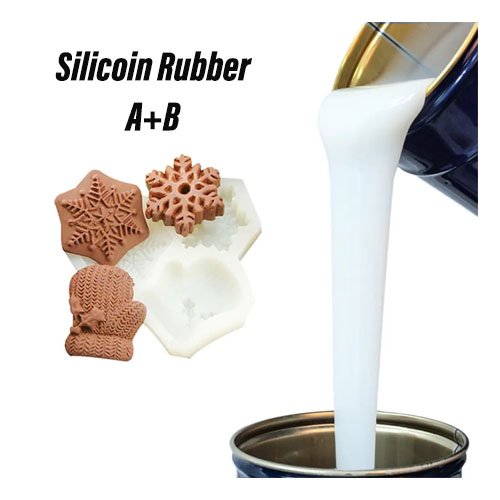
RTV2 silicone rubber is a two component material, and it consist of Part A base silicone and Part B curing agent. When the two parts mix together and pour or brush on a object, the silicone base and curing agent can cure to be a silicone mold at room temperature; And 24 hours later, the silicone mold can be released from the object, and then the silicone mold can be poured into the following material to copy: Plaster, polyurethane, PU, GRC, cement, resin, polyester, wax etc…
Procedures of RTV2 silicones for decorative concrete molds
1. Make sure the surface of the original is clean and free of loose material.
2. Weight 100 Part A base and 2 parts of CA30 Curing Agent in a clean container.
3. Stir Part A base silicone before use thoroughly, as filler separation may occur upon prolonged storage.
4. Mix Part A and Part B evenly until the CA30 completely dispersed in the base.
5. Pour the mixed Part A base silicone and CA-30 curing agent as soon as possible onto the original
6. De-mold after 24 hours, it is will improve the replicate times of silicone mold.
Note: It is strongly recommended that entrapped air be removed in a vacuum chamber, allowing the mix to completely expand and then collapse. After a further 1-2 mins under vacuum, the mix should be inspected and can be used if free of air bubbles. A volume increase of 3-5 times will occur on vacuum de-airing the mixture. So a suitably large container should be chosen.
Related products
Product
Product


Product

Product