
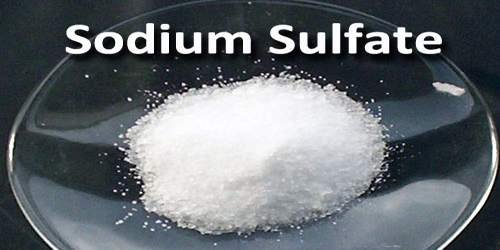
Sodium sulfate Na2SO4
₨300.00
| Item | Index(Class I first class product) | Result |
| Na2SO4 content ≥ (%) | 99.0 | 99.4 |
| Water insoluble content ≤ (%) | 0.05 | 0.01 |
| Total calcium and magnesium ≤ (%) | 0.15 | 0.001 |
| Chloride (calculated by Cl) ≤ (%) | 0.35 | 0.30 |
| Iron (calculated by Fe) ≤ (%) | 0.002 | 0.001 |
| Water content ≤ (%) | 0.20 | 0.03 |
| Whiteness ≥ (%) | 82 | 87 |
| Alkalinity (calculated by Na2CO3) ≤ (%) | 0.02 |
Main purpose:
1. The chemical industry is used to manufacture sodium sulfide, sodium silicate, water glass and other chemical products.
2. Cooking agent used in the paper industry to make kraft pulp.
3. It is used in the glass industry as a cosolvent instead of soda ash.
4. The textile industry is used for blending vinylon spinning coagulant.
5. Used in nonferrous metal metallurgy, leather, etc.
6. It is used to make sodium sulfide, pulp, glass, water glass, enamel, and also as a laxative and an antidote for barium salt poisoning. It is a by-product of hydrochloric acid production from salt and sulfuric acid. In chemical industry, it is used to manufacture sodium sulfide, sodium silicate, etc. The laboratory is used to wash off barium salts. In industry, it is used as raw material to produce NaOH and H2SO4, and also used in paper making, glass, printing and dyeing, synthetic fiber, leather making, etc. Sodium sulfate is the most commonly used post-treatment desiccant in the organic synthesis laboratory.
7. It is mainly used as filler for synthetic detergent. Cooking agent used in the paper industry to make kraft pulp. Glass industry is used to replace soda ash. Chemical industry is used as raw material for manufacturing sodium sulfide, sodium silicate and other chemical products. The textile industry is used to prepare vinylon spinning coagulation bath. The pharmaceutical industry is used as a laxative. It is also used in nonferrous metallurgy, leather, etc.
8. The hydration product calcium sulphoaluminate is generated faster, thus accelerating the hydration and hardening rate of cement. The content of sodium sulfate is generally 0.5%~2% of the cement quality, which can improve the early strength of concrete by 50%~100%. The 28-day strength sometimes increases, sometimes decreases, and the increase range is about 10%, which varies with the type of cement, curing conditions and the content. It is also used as a filler for synthetic detergents, as well as in the paper industry, glass industry, chemical industry, textile industry and pharmaceutical industry.
9. It is used as analytical reagent, such as dehydrating agent, digestion catalyst for nitrogen determination, and interference inhibitor in atomic absorption spectrometry. It is also used in the pharmaceutical industry.
10. It is used in chemical industry, paper making and glass, dyestuff, printing and dyeing and pharmaceutical industry, and also used in the manufacture of synthetic fiber, leather making, non-ferrous metallurgy, enamel, etc., and also used as an additive in detergent and soap.
11. It can be used as a buffer in sulfate zinc plating to stabilize the pH value of the plating solution.
Precautions for operation:
Close operation and strengthen ventilation. Operators must receive special training and strictly abide by the operating procedures. It is recommended that operators wear self-priming filter dust mask, chemical safety goggles, anti-poison penetration work clothes and rubber gloves. Avoid dust generation. Avoid contact with acids. Handle with care to prevent package damage. Provide leakage emergency treatment equipment. Empty containers may contain harmful substances. When the dust concentration in the air exceeds the standard, the self-priming filter dust mask must be worn. When rescuing or evacuating in an emergency, you should wear a gas mask.
Precautions for storage:
Store in a cool and ventilated warehouse. Keep away from kindling and heat sources. It shall be stored separately from acids, etc., and mixed storage is strictly prohibited. The storage area shall be equipped with appropriate materials to contain the leakage.
- Classification:Sulphate
- Type:Sodium Sulphate
- CAS No.:7757-82-6
- Other Names:Mirabilite
- MF:Na2SO4
- EINECS No.:231-820-9
- Place of Origin:China
- Grade Standard:Industrial Grade
- Purity:≥99%
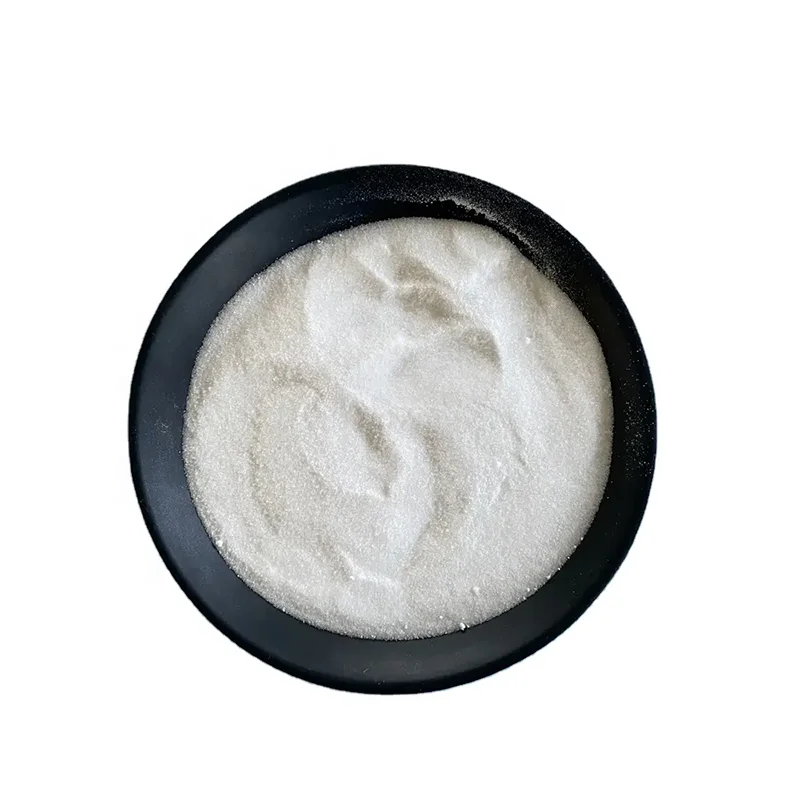
- Appearance:Colorless or white crystal
- Application:Desiccant, etc
- Brand Name:NANFENG
- Model Number:Industrial Grade
Related products
Product
Product
Product
Product
Product